
Stop Losing One-Time Buyers: Email and SMS Flows That Bring Them Back
By The Amagna Crew
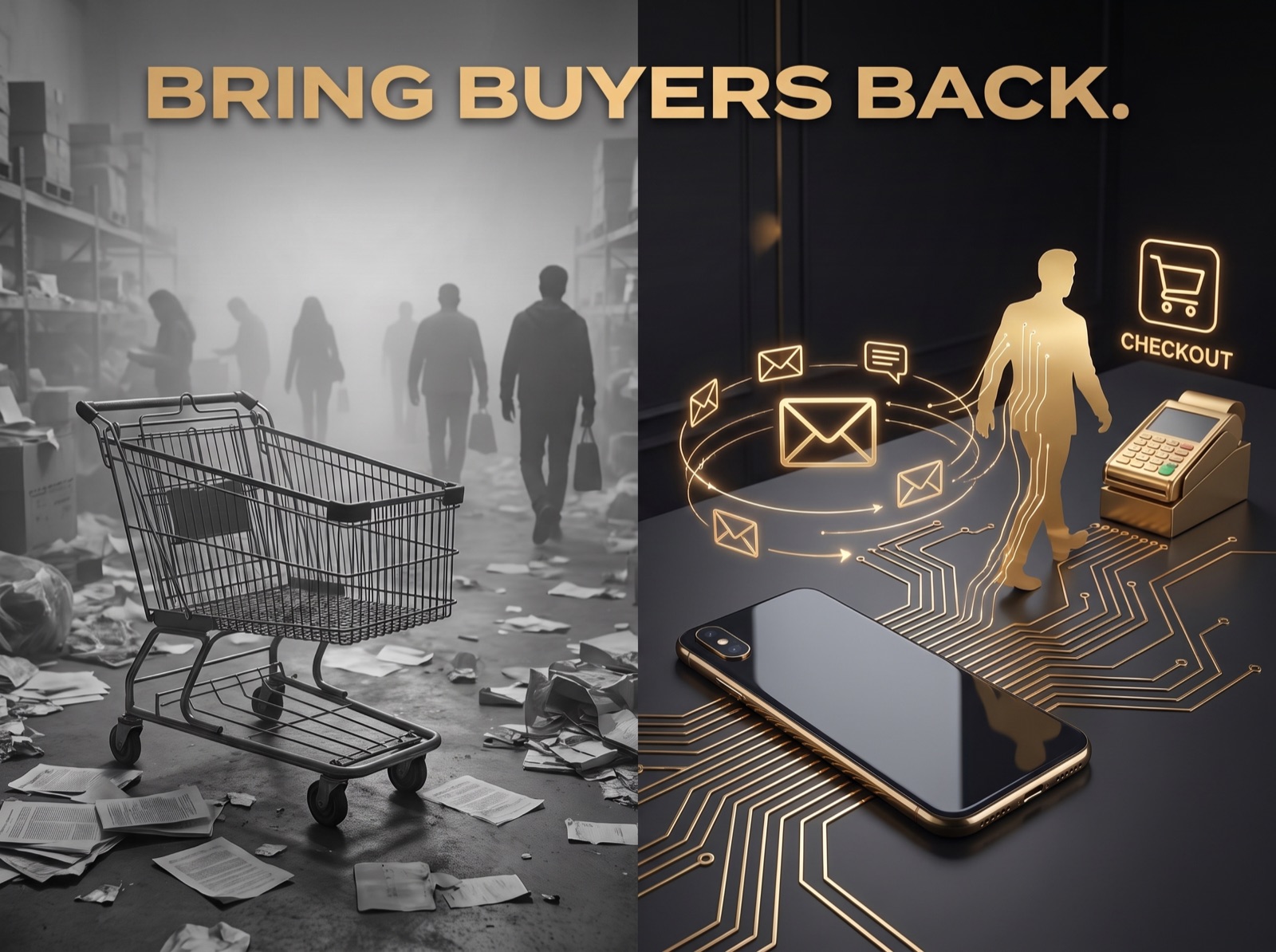
A flow is an automated email or SMS sequence triggered by something a customer does — signing up, abandoning a cart, placing an order, going quiet. A campaign is a one-time send to a list. Flows run forever in the background; campaigns run once and stop.
Most ecommerce brands pour everything into acquisition — more ads, more traffic, more first orders — and then let those hard-won customers walk out the door and never speak to them again. The buyer you paid to acquire is the cheapest next sale you'll ever make, and it's the one most brands ignore.
Retention isn't glamorous. It doesn't have the dopamine of a viral ad. But the brands that quietly win are the ones turning first-time buyers into repeat buyers — and almost all of that happens through email and SMS flows that run on their own.
What's the difference between a flow and a campaign?
A campaign is something you decide to send; a flow is something the customer triggers. That single distinction explains why one scales and the other doesn't.
Campaigns are calendar work. Someone has to pick a subject line, build the send, choose a segment, and hit go. When the team is busy — and it always is — the calendar slips and the list goes quiet.
Flows are plumbing. You build the sequence once, attach it to a trigger, and it fires whenever a customer meets the condition. Someone who abandons a cart at two in the morning gets the reminder at two in the morning, whether or not anyone is awake.
Both belong in a healthy program. Campaigns carry news — a launch, a restock, a change to the lineup. Flows carry the lifecycle. If you only have room for one right now, build the flows. They keep producing after your attention moves elsewhere, which is the logic behind an autonomous marketing system generally: put the repeatable work on rails so human time goes to the parts that need judgment.
Why the second purchase matters most
The first sale often barely breaks even after ad costs. The profit lives in the second, third, and fourth orders — the ones you don't pay to acquire. A customer who comes back is pure margin compared to a stranger you have to convince.
So the question that decides whether a brand is healthy isn't "how many new customers" — it's "how many come back." And bringing them back is a job for automated lifecycle flows, not one-off campaign blasts.
There's a second-order effect worth naming. A brand with strong repeat purchase can afford to bid higher on the first order, because it isn't trying to make all its money on day one. That's often what's happening when a competitor seems to be paying prices you can't match — they aren't smarter about ads, they're better at the back half.
Which flows should I build first?
Build them in the order a customer experiences them, and don't start the next one until the last one is live. Here is the sequence and what each one is actually for.
- Welcome flow. The moment someone joins or buys, a short series introduces the brand, sets expectations, and earns the next click. First impressions, automated. Its real job is teaching a stranger who you are and why you exist before you ask for anything — and setting a rhythm so your later messages don't arrive as a surprise.
- Abandoned browse and cart. People add to cart and leave constantly. A timely, well-written reminder recovers a meaningful share of those almost-sales — money that's otherwise just gone. Browse abandonment catches the earlier, softer signal: someone looked hard at a product and didn't add it. Treat these as two different levels of intent and write them differently. Cart gets a nudge; browse gets information.
- Post-purchase. After the order: shipping clarity, how to get the most from the product, and a natural nudge toward the next one. This is also where you earn reviews and referrals. Most brands waste this window on a receipt and nothing else, which is a shame — it's the one moment the customer is guaranteed to be paying attention. The same automated review-request pattern that works in service businesses works here: ask once, at the right moment, without anyone remembering to.
- Replenishment. If your product runs out on a predictable rhythm, a flow that reaches the customer just before they hit empty is the highest-leverage sequence you own. It isn't persuasion, it's timing. Base the interval on your own order data rather than a guess, and revisit it as you learn.
- Win-back. When a customer goes quiet, a sequence reaches out to pull them back before they're gone for good. The trigger is time since last order, tuned to your category — what counts as "lapsed" for a coffee brand is different from a brand selling something people replace once a year.
Set up once, these run forever in the background, working every contact at the right moment — something no team does reliably by hand.
Email or SMS?
Use email for everything by default and SMS for the small number of moments where minutes matter. They aren't competitors; they're different tools with different costs and different tolerances.
| | Email | SMS | |---|---|---| | Cost per send | Low; usually priced by list size | Higher; priced per message | | Urgency | Read when convenient | Read almost immediately | | Length | Room for images, detail, story | Short, plain, one idea | | Consent burden | Lower, but still requires permission | Higher; explicit, documented opt-in | | Best use | Welcome, education, post-purchase, win-back | Cart reminders, shipping alerts, time-sensitive offers |
The practical read: email carries the bulk of the lifecycle because it's cheap enough to run long sequences and roomy enough to actually say something. SMS is a scalpel. It lands in the same place as messages from a customer's family, which is exactly why it works and exactly why over-using it will cost you the channel.
A useful rule is that an SMS should be something the customer would be annoyed to have missed. If it doesn't clear that bar, send it as an email.
What do I need to get right about consent?
Consent is not a growth tactic to optimize around — it's the condition of having a program at all, and it should be treated as non-negotiable.
The principles are consistent everywhere: people opt in knowingly, they know what they're signing up for, and they can opt out easily at any time and have that honored immediately. Don't pre-check boxes. Don't treat a checkout email field as permission to send marketing. Keep records of when and how each contact opted in.
SMS carries a heavier burden than email, and the two consents are separate. Someone giving you an email address has not agreed to receive texts.
Rules vary by jurisdiction and change over time, and this isn't legal advice — confirm the specific requirements that apply to where you and your customers are, and check that your platform's consent capture is configured to match. Most email and SMS providers document this well and build the mechanics in. Use them.
There's a commercial argument alongside the compliance one. A list built from people who genuinely asked to hear from you performs better than a bigger list built by trickery.
Why automation is the whole point
You could write and send all of this manually. You won't, not consistently — you're running a brand. The value isn't a clever one-off email; it's that the right message reaches the right customer at the right moment, every time, without anyone remembering to hit send.
An autonomous marketing system builds these flows in your voice and keeps them running, while you stay in control of the brand and the offers. It also closes the loop: repeat buyers leave reviews and create content that feeds your ads, so retention and acquisition strengthen each other instead of competing for attention.
That loop is the part most brands miss. The customers your flows bring back are the same people producing the reviews, photos, and quotes that make your paid social work. Feed that material into an always-on ad creative system and the two halves of the machine start supplying each other. It's the model we run for ecommerce brands and, in different shapes, for everyone else we work with.
What flows can't fix
Flows amplify what's already true about your business. They don't invent demand that isn't there.
If people don't want to buy your product a second time, no sequence will change that. A win-back email to someone who was disappointed by the first order just reminds them they were disappointed. Before you invest in retention infrastructure, be honest about whether the product, the shipping experience, and the support are good enough to deserve a repeat. If they're not, fix that first — it's cheaper than any flow.
The other failure mode is over-sending, and it's permanent in a way most brands underestimate. Every extra message extracts a little revenue today and burns a little trust forever. Push too hard and people unsubscribe, mark you as spam, or — worse — stay subscribed and stop opening. That last one is invisible until your whole list has gone numb.
You can't un-annoy someone. Treat frequency as a budget you're spending, not a dial you turn up when revenue looks soft. Suppress people who just bought, and cap how many messages a single customer can get in a window across all your flows combined — so someone who abandons a cart, buys, and then hits a replenishment trigger doesn't get buried.
And flows don't replace a reason to come back. The sequence is the delivery mechanism. The offer, the product, and the brand still have to carry it.
Where to start
Start here: turn on three flows if you haven't — welcome, abandoned cart, and a simple post-purchase sequence. Those three alone tend to recover revenue you're currently losing silently.
Write them in your actual voice, not template language. Keep them short. Set the timing based on how people actually use your product, then leave them alone long enough to learn something before you start tinkering.
Once those are running, add replenishment if your product has a natural cycle, then win-back. That order matters — each one builds on a list that the earlier flows have already warmed up.
Frequently Asked Questions
How many emails should be in a welcome flow?
Enough to introduce the brand and make a case, and no more. For most brands that's a short series spread over the first week or two, not a month-long drip. Write each message so it stands on its own, since plenty of people will only open one. If you can't articulate why a message exists, cut it.
Should I send SMS and email for the same trigger?
Sometimes, but not simultaneously and not for everything. A common pattern is email first, then SMS only if the customer hasn't acted and the moment is genuinely time-sensitive — an abandoned cart, a shipping problem. Reserve the double-touch for triggers where the customer benefits from the reminder, and require separate consent for each channel.
What's a good time delay for an abandoned cart flow?
Soon enough that the purchase is still on their mind, spread over enough time to catch someone who got distracted. Most brands send a first reminder within a few hours and a second the next day. Test it against your own data — a considered, expensive purchase deserves more patience than an impulse buy.
Do flows work for brands with a single product?
Yes, though the mix shifts. Without a second product to cross-sell, the weight moves to welcome, post-purchase education, replenishment, and referral. Getting the same customer to buy again, buy more per order, or bring a friend is still cheaper than acquiring a stranger.
Should I build flows in-house or hire help?
If you have someone who can write well and owns the platform, build in-house — the tools are approachable. Hire help when the bottleneck is time or when you want the flows connected to the rest of the marketing system rather than sitting in a silo. Our pricing lays out how that works.
Retention is the least exciting and most durable advantage you can build. It doesn't need a big idea. It needs a handful of sequences that run whether or not anyone is watching, written by someone who understands what your customer actually wants next.
If you'd rather have the full lifecycle built and run for you — flows, segmentation, and the content that feeds them — that's what we do at Amagna. Chart your free Gold Map and we'll hand you a plan for turning one-time buyers into a base that comes back.
Want this for your business?
The Gold Map builds you a specific, step-by-step plan — free.
Get your Gold Map